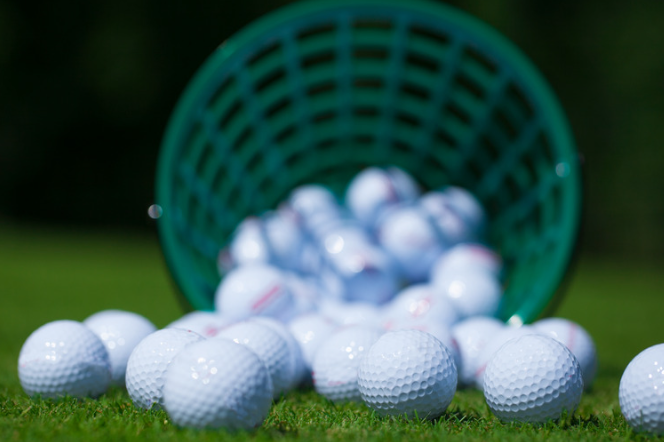

Step into any golf shop and the price gap is obvious. One dozen golf balls costs twice as much as another. Both claim distance. Both promise consistency. However, when comparing premium vs budget golf balls, the real question is simple: which actually performs better?
The answer depends on your swing speed, skill level, and scoring priorities. While premium balls offer advanced technology, budget balls deliver impressive value. Understanding the differences helps you choose wisely.
Let’s break down premium vs budget golf balls in detail so you can decide which performs better for your game.
Construction Differences Between Premium vs Budget Golf Balls
The biggest difference in premium vs budget golf balls lies in construction.
Premium Golf Ball Design
Premium models typically feature:
- 3 to 5 layers
- Urethane covers
- Advanced core technology
- Precision dimple patterns
These layers separate performance characteristics. For example, premium balls often reduce driver spin while increasing wedge spin.
This combination creates distance off the tee and stopping power on approach shots.
Budget Golf Ball Design
Budget balls usually feature:
- 2-piece construction
- Ionomer covers
- Simplified core technology
They prioritize durability and straight flight. While they lack advanced spin separation, they often produce consistent results for recreational golfers.
When evaluating premium vs budget golf balls, construction complexity directly influences performance.
Distance Comparison: Which Goes Farther?
Many golfers assume premium balls travel farther. However, distance depends largely on compression matching.
Driver Performance
Premium balls are engineered to control spin at high swing speeds. For players swinging above 95–100 mph, lower driver spin can increase carry and tighten dispersion.
However, golfers with moderate swing speeds may struggle to compress high-end balls fully. In that case, a lower-compression budget ball may generate equal—or even greater—distance.
In the debate of premium vs budget golf balls, distance advantage depends on swing characteristics rather than price alone.
Spin and Short Game Control
Short game performance is where premium balls usually stand out.
Wedge Spin
Urethane covers create more friction at impact. As a result, premium balls spin more on approach shots and chips.
Higher spin allows shots to stop faster near the pin. For skilled players, this creates scoring opportunities.
Budget balls typically spin less around the greens. Chips roll out more predictably but with less stopping power.
In premium vs budget golf balls, greenside spin remains the most noticeable difference.
Feel and Feedback
Premium balls often feel softer at impact, especially with wedges and putters.
Many players prefer this muted, responsive sensation.
Budget balls may feel firmer. However, some golfers appreciate the solid feedback.
Feel is subjective. Confidence plays a role.
When comparing premium vs budget golf balls, personal preference should influence the final decision.
Forgiveness and Side Spin
Budget balls generally produce lower overall spin.
Lower spin can slightly reduce curvature on mishits. Therefore, slicers or hook-prone players may benefit from straighter ball flight.
Premium balls, because they spin more, can exaggerate side spin if contact is inconsistent.
Higher spin rewards precise ball striking but punishes major errors.
Durability and Cost Considerations
Premium golf balls cost significantly more per dozen.
If you frequently lose balls, premium pricing can become expensive quickly.
Budget balls typically feature tougher ionomer covers. They resist scuffing and maintain durability through multiple rounds.
In the premium vs budget golf balls comparison, cost efficiency favors budget models—especially for high-handicap players.
Consistency and Quality Control
Premium manufacturers invest heavily in precision engineering and quality control.
As a result, ball-to-ball consistency tends to be tighter in premium lines.
Budget balls can still perform well, but manufacturing tolerances may vary slightly.
For competitive golfers, consistency across dozens may justify higher cost.
Who Should Choose Premium Golf Balls?
Premium golf balls make sense for golfers who:
- Generate moderate to high swing speeds
- Prioritize short game spin
- Compete regularly
- Consistently strike the ball well
If lowering scores through approach precision matters most, premium models may offer measurable gains.
Who Should Choose Budget Golf Balls?
Budget golf balls are ideal for golfers who:
- Have higher handicaps
- Lose multiple balls per round
- Prioritize durability and straight flight
- Play primarily recreational rounds
For many casual players, budget options provide excellent performance without financial pressure.
Testing Premium vs Budget Golf Balls Yourself
Rather than relying on assumptions, test both categories.
Play several rounds using each type.
Track:
- Driver carry distance
- Greens in regulation
- Proximity to the hole
- Putts per round
Pay special attention to wedge control and putting feel.
Real-world testing provides clarity beyond marketing claims.
The Psychological Factor
Confidence influences performance.
Some golfers feel more focused using a premium ball. Others feel relaxed knowing a lost ball will not cost much.
In the premium vs budget golf balls debate, mental comfort plays a subtle but important role.
Choose the ball that allows you to swing freely.
Long-Term Value vs Immediate Savings
Premium balls cost more upfront. However, improved spin control may lower scores for skilled players.
Budget balls reduce cost immediately and may offer better value for developing golfers.
Evaluate performance benefits relative to your goals.
The best golf ball is not defined by price—it is defined by fit.
Conclusion: Premium vs Budget Golf Balls—Which Perform Better?
There is no universal winner in the premium vs budget golf balls comparison.
Premium balls excel in greenside spin, feel, and performance consistency. They reward solid ball striking and benefit competitive players.
Budget balls deliver durability, straighter flight, and excellent value. They suit recreational golfers and those still refining fundamentals.
The right choice depends on your swing speed, scoring priorities, and budget.
Test thoughtfully. Match compression to your game. Choose the ball that supports your strengths.
Because ultimately, performance is personal—not promotional.
FAQs
- Do premium golf balls always go farther?
Not necessarily. Distance depends on compression matching and swing speed. - Why are premium golf balls more expensive?
They use multi-layer construction and urethane covers for enhanced spin and control. - Are budget golf balls good for beginners?
Yes, they offer durability, straighter flight, and lower cost. - Do premium balls improve short game performance?
Typically yes, due to higher spin and softer feel around the greens. - How should I choose between premium and budget balls?
Test both types, compare performance on the course, and select the option that best matches your swing and scoring goals.