
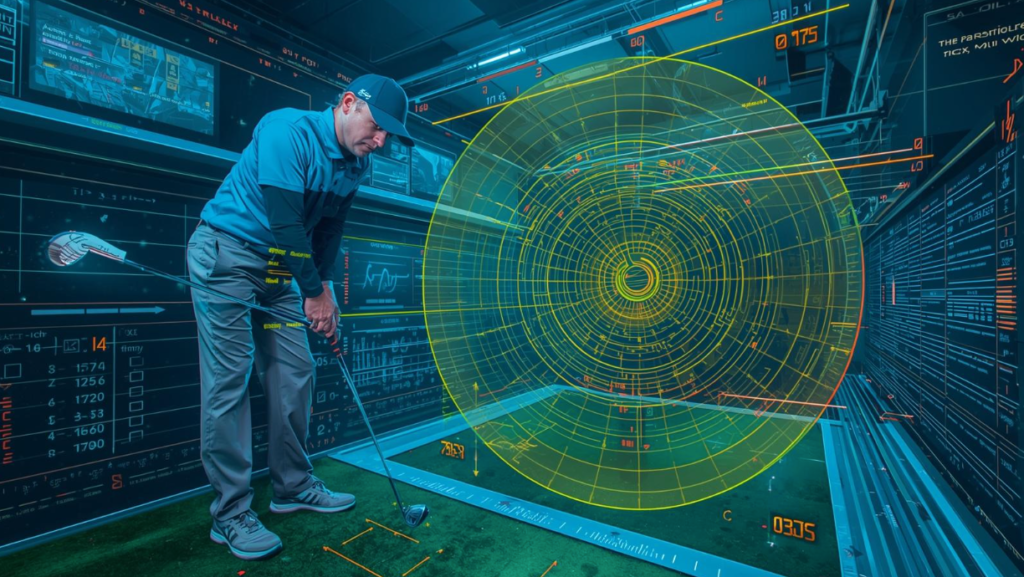
Launch monitors club fitting has completely reshaped how golfers choose equipment. In the past, club fitting relied heavily on observation, sound, and feel. While those elements still matter, modern launch monitor data now adds something essential: certainty. Every swing produces measurable information, and that information reveals what is really happening at impact.
Instead of guessing why a shot launched too low or curved unexpectedly, golfers can now see the explanation instantly. As a result, confusion disappears. Confidence replaces doubt. Equipment decisions feel logical rather than hopeful.
Launch monitors club fitting does not eliminate feel. Rather, it strengthens it by confirming what the golfer senses. When data and feel align, trust grows. When they conflict, improvement begins.
Why Traditional Club Fitting Often Fell Short
Traditional club fitting depended on experience and visual judgment. Skilled fitters could read ball flight and hear strike quality. However, even the best eyes have limits.
For example, launch angle cannot be accurately estimated by sight alone. Spin rate cannot be reliably judged. Clubhead speed often appears misleading. Consequently, small fitting errors were common.
Launch monitors club fitting removes those blind spots. Every critical variable is measured precisely. Numbers validate observations or reveal hidden problems.
Because of this, modern fittings are based on facts instead of assumptions. That shift alone produces better results for most golfers.
What Launch Monitors Measure During Club Fitting
Launch monitors capture multiple data points in milliseconds. Each one contributes to the full performance picture.
Clubhead speed shows potential power. Ball speed reveals efficiency. Launch angle controls trajectory. Spin rate influences carry and stopping ability. Face angle determines start direction. Club path explains curvature.
Launch monitors club fitting connects these metrics logically. No number exists in isolation. Together, they explain ball flight behavior clearly.
As a result, fitters diagnose issues faster and more accurately. Equipment changes become intentional instead of experimental.
Why Ball Speed Is the Cornerstone of Accurate Fitting
Ball speed matters more than raw swing speed. It reflects how efficiently energy transfers to the ball.
A golfer may swing fast yet lose distance due to poor contact or mismatched equipment. Launch monitors club fitting highlights this problem instantly.
When ball speed improves without added effort, the equipment is working properly. If ball speed lags, adjustments are required.
By prioritizing ball speed, fitters quickly identify shaft incompatibility, face contact issues, or loft problems. Therefore, progress happens faster.
Launch Angle and Spin: The True Distance Formula
Distance depends on more than speed. Launch and spin must work together.
If launch is too low, the ball falls quickly. If spin is excessive, the shot balloons. Too little spin causes weak carry.
Launch monitors club fitting calculates optimal launch windows based on swing characteristics. Loft adjustments become precise rather than approximate.
Once launch and spin align, carry distance increases naturally. Roll improves as well. Consistency follows.
Many golfers gain distance simply by correcting these two variables.
How Launch Monitors Improve Shaft Selection
Shaft fitting once relied heavily on labels and subjective feel. Unfortunately, that approach often misled golfers.
Launch monitors club fitting evaluates how different shafts affect timing, dispersion, and strike quality. Load patterns become visible. Release points are revealed.
A shaft that feels smooth but produces poor dispersion is exposed quickly. Conversely, a shaft that feels firm yet delivers better results earns confidence.
Because of this clarity, shaft selection becomes logical. Golfers trust performance data instead of assumptions.
Lie Angle Accuracy Backed by Data
Lie angle directly influences direction. Even minor errors cause consistent misses.
Previously, lie adjustments relied on static measurements or impact tape. While helpful, those methods lacked context.
Launch monitors club fitting displays start lines and curvature patterns clearly. Directional tendencies expose lie angle issues immediately.
Dynamic adjustments are made with confidence. Shots straighten without swing changes.
That improvement saves strokes quietly but consistently.
Face Angle and Path Explained Clearly
Shot shape often frustrates golfers. Many blame grip or alignment. Sometimes that is correct. Often it is not.
Launch monitors club fitting separates face angle from club path. This distinction is critical.
A slice may result from an open face, an out-to-in path, or both. Without data, fixes become guesses.
With clear feedback, fitters identify the real cause. Equipment choices support better patterns.
Understanding replaces frustration.
Why Drivers Benefit Most from Launch Monitor Fitting
Drivers magnify small fitting errors. Loft, shaft, and head design all matter.
Launch monitors club fitting allows quick comparisons. Shots are tested back-to-back. Numbers reveal performance differences instantly.
Golfers often see improvement on the screen before feeling it fully. That visual proof builds trust quickly.
Driver fitting becomes structured rather than emotional.
Iron Fitting and Distance Gapping Precision
Consistent gapping improves scoring. Without proper gaps, club selection becomes uncertain.
Launch monitors club fitting measures carry distances accurately. Loft gaps are refined intentionally.
Inconsistent spacing is corrected quickly. Set composition improves.
As a result, golfers make decisions confidently. Guesswork disappears.
Wedge Fitting and Spin Control Accuracy
Wedges rely on precise launch and spin control. Feel alone cannot measure this accurately.
Launch monitors club fitting evaluates spin rates across wedge shots. Loft and bounce combinations are optimized.
Distance control improves. Trajectory becomes predictable.
Short-game confidence grows because numbers confirm performance.
Indoor and Outdoor Launch Monitor Fitting
Indoor fittings provide consistency. Outdoor fittings reveal real ball flight.
Both environments have advantages. Launch monitors bridge the gap between them.
Modern systems track ball flight accurately indoors. Outdoors, they confirm visual results.
Launch monitors club fitting succeeds when data is interpreted in context rather than isolation.
How Launch Monitors Reduce Bias
Every golfer has preferences. Brands create expectations. Bias influences decisions.
Launch monitors club fitting minimizes bias by letting performance speak first.
Unexpected options often outperform favorites. Data encourages open-minded choices.
Better decisions follow naturally.
Why Launch Monitors Speed Up the Fitting Process
Traditional fittings required trial and error. Fatigue often set in.
Launch monitors club fitting accelerates decisions through instant feedback. Poor options are eliminated quickly.
Strong performers stand out clearly. Energy stays focused.
Efficiency improves without sacrificing quality.
Education Through Data and Visual Feedback
Understanding builds confidence. Confusion creates doubt.
Launch monitors club fitting educates golfers visually. Seeing cause and effect clarifies performance.
Golfers learn why shots behave as they do. Practice becomes smarter.
Better players emerge through understanding.
Why Data Does Not Replace Feel
Data guides decisions. Feel confirms them.
Launch monitors club fitting respects both. Numbers highlight trends. Feel ensures comfort.
Balanced fitting creates lasting results.
Technology supports human judgment rather than replacing it.
Common Misconceptions About Launch Monitor Fitting
Some believe data is only for professionals. That belief is incorrect.
Others fear information overload. Skilled fitters simplify the process.
Some assume fitting becomes robotic. In reality, it becomes more personal.
Launch monitors club fitting benefits every golfer.
When Golfers Should Consider Launch Monitor Fitting
Distance loss. Inconsistent flight. Equipment changes. Swing adjustments.
These moments signal opportunity.
Launch monitors club fitting works best when answers are needed, not guesses.
Early action prevents frustration.
Choosing the Right Fitter and Technology
Not all launch monitors are equal. Accuracy varies.
Interpretation matters even more. Data without explanation misleads.
Choose fitters who communicate clearly. Ask questions.
Launch monitors club fitting succeeds through collaboration.
Long-Term Benefits of Data-Driven Fitting
Properly fitted clubs support consistency over time. Unnecessary changes decrease.
Launch monitors club fitting reduces wasted spending.
Golfers enjoy more rounds with fewer frustrations.
Value compounds quietly.
Conclusion
Launch monitors club fitting has transformed equipment selection by replacing guesswork with precision. Through clear performance data, golfers gain confidence, consistency, and control. Every swing tells a story, and launch monitors translate that story accurately.
When equipment matches reality, golf becomes easier. Distance improves efficiently. Accuracy stabilizes naturally. Confidence grows steadily. Launch monitor technology does not complicate club fitting. Instead, it simplifies decisions and enhances enjoyment. For golfers seeking clarity and better performance, data-driven fitting is essential.
FAQ
1. Are launch monitors only useful for advanced golfers?
No. Golfers at every skill level benefit from accurate performance data.
2. Do launch monitors replace professional fitters?
No. They support fitters by providing reliable insights.
3. Is indoor launch monitor fitting accurate?
Yes, when modern systems are properly calibrated.
4. How long does a launch monitor fitting take?
Most sessions last between 60 and 90 minutes.
5. Can launch monitor fitting improve distance quickly?
Yes. Optimizing launch, spin, and shaft selection often produces immediate gains.