
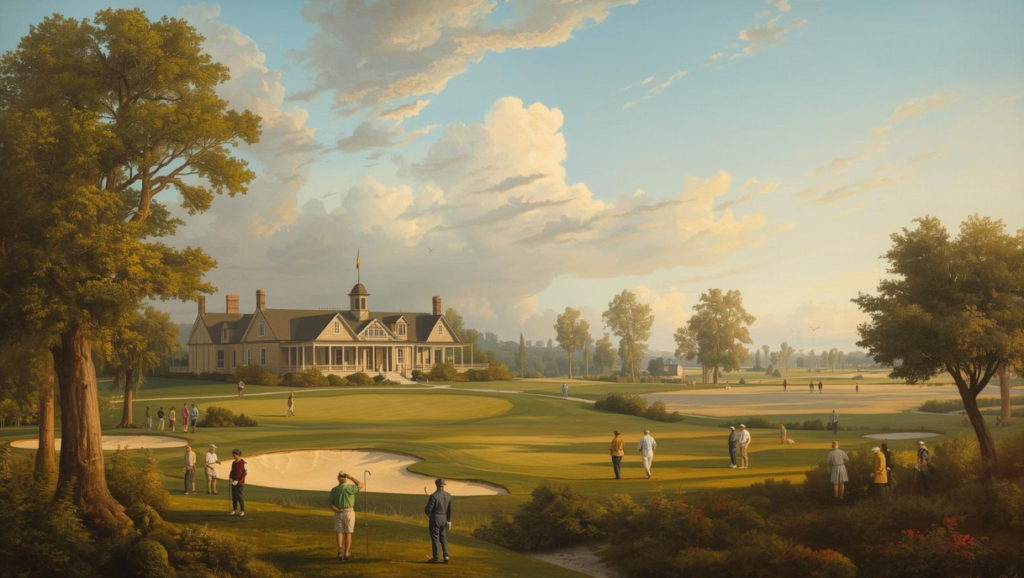
Golf did not begin as a sport of perfection. Instead, it emerged as a game of adaptation, patience, and imagination. Across centuries, historic golf courses taught players how to think before they learned how to swing. Those early lessons still echo through modern golf.
Rather than relying on manufactured difficulty, early courses trusted natural land. Wind, uneven lies, and shared spaces forced golfers to problem-solve. As a result, strategy became the foundation of the game.
Over time, those strategic lessons shaped rules, etiquette, and design philosophy.
Where Golf Learned Its Identity
Scotland gave golf its character. Long before formal architecture existed, players navigated coastal land shaped by weather and time. Because terrain dictated play, creativity mattered more than strength.
Consequently, early golfers learned to use the ground. Low shots rolled toward targets. Wind demanded adjustment. Shot selection mattered.
From this environment, golf became a thinking game.
St Andrews and the DNA of Golf
Few places influenced golf like St Andrews. More than a course, it became a blueprint. Shared fairways encouraged awareness. Double greens demanded precision. Blind shots rewarded trust.
Instead of forcing uniformity, the land dictated design. Therefore, strategy evolved naturally. Players learned patience. Humility followed.
Even today, St Andrews defines golf’s soul.
Prestwick and Competitive Golf’s Birth
Prestwick transformed golf from pastime to competition. Hosting the first Open Championship changed everything.
Narrow corridors punished recklessness. Strategic placement outweighed raw power. Because of this, championship golf became a test of control.
That competitive standard still guides major venues.
Musselburgh and Golf’s Structure
Before standardization, Musselburgh Links helped organize the game. Regular competition required consistency.
Gradually, hole counts stabilized. Equipment rules formed. Tee areas became defined. As a result, golf matured into a structured sport.
Musselburgh represents order emerging from tradition.
Royal County Down and Natural Drama
Nature dominates Royal County Down. Mountains frame fairways. Wind dictates decisions. Uneven lies challenge balance.
Rather than resisting terrain, the course embraces it. Consequently, adaptability becomes essential.
Every round feels different, yet fair.
Pinehurst No. 2 and Subtle Difficulty
Donald Ross reshaped green design at Pinehurst No. 2. Crowned surfaces rejected careless shots.
Because approach play mattered more, precision became critical. Recovery required imagination. Misses carried consequences.
Subtlety replaced brute force.
Augusta National and Golf’s Visual Era
Augusta National redefined presentation. Beauty and challenge coexisted.
Wide fairways invited aggression. Sloping greens punished errors. Meanwhile, immaculate conditioning set expectations.
Televised golf changed forever.
The Philosophy Behind Historic Design
Historic golf courses were not built for trends. They reflected beliefs.
Some rewarded patience. Others demanded bravery. All respected land.
Understanding these philosophies deepens appreciation for the game.
Why Historic Courses Still Challenge Modern Players
Technology has evolved. Strategy has not.
Angles still matter. Wind still matters. Decision-making still separates players.
Therefore, historic golf courses remain relevant.
Equipment Evolution Shaped by Courses
Courses influenced clubs long before clubs influenced courses. Small greens demanded accuracy. Firm turf favored control.
Instead of overpowering layouts, equipment adapted slowly. Balance preserved golf’s integrity.
That restraint matters today.
Rules Born from Real Play
Many rules emerged from situations on historic golf courses. Shared fairways created safety concerns. Natural hazards demanded clarity.
Because rules solved real problems, they remain timeless.
Preservation Versus Progress
Modern pressures challenge preservation. Distance expectations rise. Conditioning standards evolve.
However, thoughtful updates protect strategy without erasing character. Balance remains essential.
Why Playing Historic Courses Feels Different
History changes mindset. Awareness increases. Tempo slows.
Knowing legends walked the same ground matters. Focus sharpens.
Every shot carries meaning.
Cultural Impact Beyond Golf
Historic golf courses shaped towns. Traditions grew alongside fairways.
Golf became heritage, not just sport.
That connection still resonates.
Lessons Modern Golf Still Learns
Simplicity beats complexity. Strategy beats power. Creativity beats conformity.
Historic golf courses teach these truths quietly.
Conclusion
Historic golf courses shaped the game by teaching restraint, imagination, and respect for land. Long before analytics and technology, these layouts defined golf’s strategic heart. Their influence remains embedded in rules, design, and culture.
By studying historic golf courses, players reconnect with golf’s essence. Decisions matter. Creativity thrives. Tradition guides progress. In a fast-moving modern game, these timeless venues remind us why golf endures.
FAQ
1. What defines a historic golf course?
A course that significantly influenced golf’s rules, strategy, or design philosophy.
2. Why are historic golf courses still difficult?
Because strategy and decision-making never become outdated.
3. Are historic courses shorter than modern layouts?
Often yes, but they rely on design rather than length.
4. Do modern architects study historic courses?
Yes, classic principles still guide contemporary design.
5. Is playing historic golf courses worthwhile for amateurs?
Absolutely, because they offer deeper understanding and enjoyment.